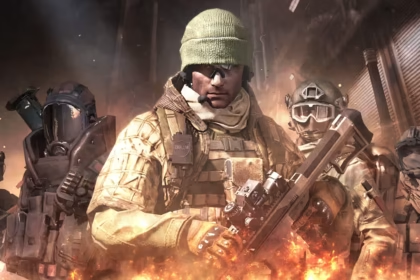
I played FINAL FANTASY XV WINDOWS EDITION for the third time, and this time I finished it specifically for my review and content. I played on PC with keyboard and mouse, completed the main story, and then played Episode Gladiolus, Episode Prompto, Episode Ignis, and Episode Ardyn. After finishing, I explored the endgame and chose a few activities I thought would be interesting to show viewers. My total playtime was around 50 hours.
If you ask whether FFXV is good, my answer is that it’s fun to play, but its story feels incomplete. Its visuals still impress me, the Astral summons can look spectacular, and the adventure has a distinctive atmosphere. Yet there are serious frustrations: excessive grinding, a large but often empty world, repetitive NPC appearances, slow animations, inconsistent camera and targeting, unpredictable Astral summons, music copyright difficulties for streamers, and PC crashes that can cost progress.
These are my observations from completing the game and its story episodes. They’re particularly relevant if you want a coherent story, not just enjoyable exploration.
FINAL FANTASY XV Windows Edition narrated review
I also recorded a narrated review in Indonesian. Watch the video below or open it on Nosphire.
FINAL FANTASY XV Windows Edition gameplay
Gameplay
FFXV’s core loop is straightforward: explore, take quests, fight, upgrade, and repeat. The open world encourages wandering, though the main story is always waiting for you.
Initially, that was fun. I’d travel, admire the scenery, find enemies, level up, and return to town. Over time, however, the loop became harder to enjoy because of heavy grinding and an open world that felt only partly developed.
Beautiful exploration in a strangely empty world
The scenery is probably why I enjoyed wandering around FFXV in the first place. I stopped at locations just to look at them, not necessarily to complete objectives. These graphics still work for me beyond any nostalgia about when the game was released.
Unfortunately, a beautiful landscape isn’t the same as a lively world. Many spaces felt empty: wide terrain, vegetation, and long roads, but few unexpected encounters. Random NPCs were rare, and monsters gradually felt repetitive.
That’s why FFXV’s open world feels unfinished to me. FFXV’s scale suggests the ambition of a large, active place, but the actual density of encounters and activities doesn’t consistently support that ambition.
Too few NPCs and repeated faces
Another FFXV issue that weakens immersion is the small number of NPC designs. I’d recognize the same faces and outfits repeatedly. When the environments look detailed but the people seem copied and pasted, the illusion breaks.
It’s more than a minor visual complaint. A convincing open world needs variety in people, behavior, and activities. FFXV’s lack of it makes already sparse areas feel socially empty.
Side quests often feel like padding
I don’t dislike side quests. Good side content can make an open world richer. In FFXV, though, many side missions felt like distractions that sent me back and forth without enough story or memorable experiences in return.
Some FFXV quests seemed stretched out so that short objectives would take much longer. Instead of interesting content, I was given repeated journeys and tasks that interrupted the pacing.
The side quests I considered worthwhile involved royal arms, the Regalia, and story-related material. At least those connected to the world and what makes FFXV distinct.
Combat: spectacular but chaotic
FFXV combat can be impressive and satisfying, but I’d describe FFXV’s fights as spectacular and chaotic, especially when many enemies are involved.
I played with keyboard and mouse, so I can’t compare the controls with a gamepad. The feel depends heavily on the character and weapon. Some actions feel weighty, others responsive, and I frequently used warp attacks.
I tend to play aggressively, attacking and parrying. Parrying isn’t inherently difficult to me, but it can become awkward with Gladiolus or when Noctis uses a heavy weapon.
I didn’t think the challenge itself was unfair. My frustration came from technical inconsistencies that made battles harder for the wrong reasons: camera control and targeting.
Camera and targeting problems
FFXV’s camera struggles in tight areas or around large enemies. But the problem I met most frequently was unreliable targeting. It happened against different enemies and became particularly irritating in tougher fights.
Another awkward detail was that the clicking input for running and attacking overlapped in my setup. Trying to escape a chaotic battle could become unnecessarily uncomfortable.
One clear example was a fight against a giant war-machine tank. Its weak point was the head, but the targeting system kept locking onto its legs. Damage stayed low, the fight dragged out, and I felt I was fighting the controls instead of the enemy. I experienced similar issues elsewhere.
Progression felt so grind-heavy that I used a resource mod
Character progression is noticeable in FFXV, but the grind to get stronger felt excessive. It didn’t provide the kind of repetition I enjoy.
The problem wasn’t repetition alone. Limited enemy variety, uninspiring side quests, and large empty spaces made those repeated tasks boring more quickly.
Because of that, around the middle of the game or near my move to another continent, I used a resource mod. I wanted to keep recording content without getting stuck in grinding I found unreasonable. This was an offline game, yet the grind sometimes reminded me of an online game. The mod affected my progression experience, and I’m disclosing it here rather than presenting my playthrough as completely unmodified.
Slow animations add up over dozens of hours
Some FFXV animations took more time than I wanted, including:
- Climbing ladders,
- Getting out of the car,
- Activities with a chocobo,
- Accepting and completing hunter quests,
- And numerous other minor actions.
One slow animation isn’t a major issue. After dozens of hours, though, they accumulate and make the pacing feel more tiring than necessary.
The flying Regalia looks great but has little practical use
FFXV’s flying Regalia is visually exciting when you first unlock it. I imagined it would be useful for traveling between countries or continents and showing off the world’s scale.
Because the open world felt limited, the flying car ended up as a flashy gimmick for me. It was fun briefly but rarely useful for everyday travel. The off-road Regalia was far more practical when moving around Lucis.
The flying version had a particular use for reaching a small special area connected to a hidden dungeon. Beyond that, its appeal was more about style than usefulness.
Astral summons: epic moments with unclear conditions
The Astral summons are among FFXV’s most spectacular moments. My biggest criticism is that the conditions for triggering them weren’t clear.
I saw discussions about ways to summon an Astral, including strategies claimed to be official, but those approaches didn’t feel consistent in my experience. The opportunity seemed largely random.
That unpredictability led to absurd moments:
- A summon appearing against weak enemies,
- An option appearing when a single nearly defeated enemy remained,
- Or the summon becoming available almost immediately after a battle began.
Yet when I actually needed help against a difficult enemy after a long fight, the summon option often refused to appear. The Astrals are a major part of FFXV’s spectacle, but I didn’t feel I had clear control over them.
Visuals and world design
If there’s one consistently strong element, it’s the visuals. I think FFXV still looks excellent and hasn’t aged as badly as many other games. Its presentation remains a major reason to play.
I also remember the world, especially the central continent, because it was the only area I could explore as one large open-world space.
Animations generally look smooth, and I found the UI comfortable. But those strengths don’t erase the empty stretches and repetitive NPCs that undermine the feeling of a living world.
Story and characters
I liked the premise: Lucis was deceived during what initially seemed to be peace talks or a ceasefire with Niflheim. Noctis becomes a prince on the run with his friends, searching for the royal arms as part of his claim to the throne.

Following the actual storyline was far more difficult. Important events seemed rushed, cut, or skipped. Too many things happened off-screen. I particularly noticed the gaps when the story briefly showed a younger Noctis without adequately developing that period. I kept thinking the main narrative needed more context from his childhood rather than starting so directly with his escape.
The biggest structural problem: story DLC exists outside the main chapters
This is one of my most important complaints. To me, the story feels incomplete not just because of individual plot holes, but because essential material is separated into optional episodes.
The base game has 15 chapters, while story DLC such as Gladiolus, Prompto, Ignis, and Ardyn fills in different events. There’s also content such as Comrades. Most players will naturally finish the base game and then play the DLC.
But these episodes don’t always feel like bonuses. They often seem to contain scenes that should have been part of the main narrative. If those events had been integrated at the appropriate points, the whole story might have felt like a sequence of more than 20 chapters. Instead, the base game leaves gaps that only become clear after you finish it.
Episode Gladiolus is a useful example. Gladiolus leaves Noctis’s group around Chapter 7 and later returns. If you only play the main game, you may wonder where he went. The DLC eventually explains what happened during that absence.
The result is awkward storytelling. You’re asked to finish the main plot first, then revisit important moments that should have carried emotional weight while they were happening.
That’s one reason I think FFXV’s narrative is frustratingly incomplete, even though the wider world and its conflicts have significant potential.
Noctis and Lunafreya: an effective tragedy with too little Lunafreya
The tragedy between Noctis and Lunafreya has powerful visual moments, but Lunafreya has too little screen time and not enough detail about her life.
Her importance to the plot should have been matched with opportunities to know her properly. I even think playable Lunafreya segments could have given her role the attention it deserved.

Characters most affected: Lunafreya, Noctis, and Ardyn
If I had to name the three characters most disadvantaged by the missing material, they’d be:
- Lunafreya: The princess of Tenebrae, descended from people able to hear the gods, but given too little screen time and backstory.
- Noctis: The central character whose background connects to the main lore and should have been developed more thoroughly.
- Ardyn: A foundation of the central conflict whose origins deserve more detail.
Other characters had potential too, but their presentation often felt uneven.

Ravus and an underdeveloped personal conflict
Ravus’s hatred of Noctis is one example of a conflict that seemed to jump ahead. Episode Ignis helped me understand that Ravus cared deeply for Lunafreya and wanted to trust her, but not Noctis as the chosen one. Even with that explanation, their conflict needed more time to develop dramatically.
King Regis and conflicting versions of events
I wanted to learn a little more about Regis’s youth, though not necessarily every detail. More frustrating were the different accounts of events involving him, including Episode Ardyn and Kingsglaive: Final Fantasy XV. Major story information is scattered across versions of battles and deaths, making the overall timeline harder to follow.
Gaps in the lore: Eos, Astrals, and demons
I had several unanswered questions about the setting:
- The world’s origins and early history of Lucis felt incomplete.
- The origins and nature of demons needed more explanation.
The Astrals I encountered or learned about included Titan, Ramuh, Leviathan, Shiva, Bahamut, and Ifrit, while Garuda appeared through a collaboration event outside the main narrative. Even with these figures present, I still had questions about their role and history.
FFXV story DLC: it fills gaps and exposes the problem
I finished four story episodes, and each one explained something missing from the base game. At the same time, that reinforced my criticism of the story’s structure.

Episode Gladiolus
This episode explains what Gladio was doing when he left the party. I liked having that context, but I found the parry mechanics less like an enjoyable challenge and more like control friction that forced me to change my playstyle.
Episode Prompto
Prompto’s episode explores his origins and what happened when he was separated from the group. It changed how I saw him. The third-person shooting gameplay was a refreshing change, but I disliked the aiming and movement controls, including while reloading.
Episode Ignis
This was the most important episode to me. It offered a possible alternative ending, which I found satisfying. I still think that outcome should have been an option in the base game’s story instead of a separate episode played after the ending.
Episode Ignis also added context for Ravus and his reasons for turning against Niflheim, making some main-story events easier to understand.
Episode Ardyn
Episode Ardyn clarified why Ardyn had attacked Lucis. His actions were rooted in betrayal and the fate of the woman he loved, not random malice. But it also raised further questions for me about Aera, Somnus, Gilgamesh, and ‘Demio,’ while leaving other parts of the story unexplained.
Canceled DLC and my biggest disappointment
I was particularly disappointed by planned story episodes that were canceled. The source article lists Aranea, Lunafreya, Ravus, Regis, and Noctis’s ‘true ending’ among the material I wished had been completed. In my view, those characters needed more development. I felt let down and angry about how much of the story remained unresolved, making it difficult to recommend FFXV to anyone who wants a complete narrative.
Audio and music
FFXV’s sound design feels substantial. Some music is good, though not many tracks stayed with me. Voice acting seemed ordinary, and dialogue mixing was clear.
For streamers, though, I faced a serious music copyright concern. I could easily avoid music from the radio, but some background tracks in towns and particular scenes couldn’t be skipped so easily. Disabling all music would make the game less enjoyable, while repeatedly adjusting sound settings interrupted my content workflow.
Performance and stability
My FFXV PC experience had recurring technical problems, especially:
- Crashes, sometimes while entering the main menu,
- And alt-tab or Windows cursor issues that interfered with clicks.
A crash could cost me progress when I hadn’t saved and no automatic checkpoint was available. I had to replay sections more than once. Oddly, after roughly Part 20 of my recorded playthrough, things became stable. Before that I also encountered a ‘not responding’ problem serious enough to prompt a Windows reset. Those are my experiences, not evidence that every PC will have the same issues.
Price and value
I paid about Rp800,000 when preordering. Knowing the problems now, I regret paying that much. I still think FFXV is worth playing, but only on a meaningful discount. At the time of writing, I considered around Rp250,000 or less a much better price.
I also recommended the optional 4K texture pack for better detail. In my original assessment, I advised hardware stronger than a GTX 1080 Ti for comfortable use of those assets. That’s a personal recommendation from the original review, not a current universal requirement.
Endgame activities and Comrades
In the FFXV endgame, I chose activities that looked worthwhile for video content: fighting a giant tortoise, fishing for a whale, doing the FFXIV collaboration quest to summon Garuda, and fighting Omega.
I didn’t really get into FFXV Comrades because it’s online. When I tried, party-based missions were hard to play because the population seemed small. I know Comrades connects to the period following Chapter 13 when Noctis disappears, but from my experience it felt more like bonus content than a solution to the main story’s gaps.
Conclusion: FINAL FANTASY XV Windows Edition
FINAL FANTASY XV Windows Edition still has impressive scale and spectacle. Its visuals look excellent, Astral summons can be magnificent, and the world has an appealing sense of adventure. It also offers plenty of hours for players who enjoy exploring and collecting memorable moments.
But FFXV’s flaws are substantial: excessive grinding, a beautiful yet often empty open world, repetitive NPC designs, side quests that feel padded, slow minor animations, inconsistent targeting and camera behavior, unpredictable summons, music copyright difficulties for streamers, PC crashes, and a fragmented story whose important episodes are separated into DLC.
I still recommend the game with major reservations. The main story centers on Noctis’s escape and efforts to reclaim Lucis, but it leaves too many gaps. If your priority is a strong, complete narrative, you may find FFXV disappointing.
That’s also why I’d advise buying FFXV at a discount, ideally near the Rp250,000 level I mentioned earlier. If it costs over Rp300,000, you need to decide whether the visuals and gameplay justify the storytelling problems. For another lengthy adventure game review, read my Kena: Bridge of Spirits review. You can check official release information on the FINAL FANTASY XV Steam page.

Feedback to developers from a player’s perspective
I don’t mind a game occupying 200 GB or more if the content justifies it: varied NPCs, distinct monsters, large and populated maps, and plenty to do. File size alone isn’t the issue. It’s disappointing when a huge installation doesn’t make the world feel rich or alive.