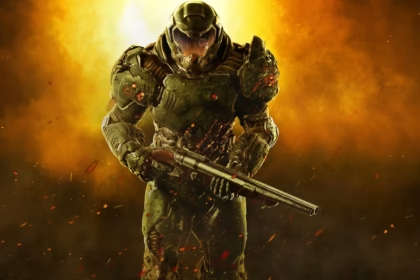

Some games feel right from the first minute, while others become genuinely enjoyable only after you find the right way to play them. My experience with DOOM (2016) was closer to the latter. I started the campaign on Hurt Me Plenty, or Normal. It felt comfortable, but not challenging enough to satisfy me. When I reached Chapter 3, I switched to Ultra-Violence, and the combat became much more exciting.
I played DOOM (2016) on PC through Steam with a keyboard and mouse, using Vulkan and Ultra graphics settings. I finished the campaign in about 13 hours. My experience wasn’t always smooth: there were satisfying battles, weapons I needed to get used to, secrets I missed, and crashes that interrupted play. Even so, I enjoyed the game through to the ending.
I bought DOOM (2016) on sale for Rp53,000, compared with a regular price of Rp266,000. Besides reviewing the campaign, I wanted to decide whether it was worth the money, particularly with Arcade Mode, multiplayer, and SnapMap available after the story.
DOOM (2016) Video Review
You can watch my video review below. It’s in Indonesian and covers the game in depth, although this article includes more detail. Watch it here.
DOOM (2016) Gameplay: Ultra-Violence Changed Everything
Changing difficulty was one of the most important decisions I made. On Hurt Me Plenty, combat didn’t feel quite challenging enough. That wasn’t a flaw in the mechanics; it simply wasn’t the experience I wanted. Switching to Ultra-Violence in Chapter 3 changed everything. I needed to move more quickly, choose weapons carefully, and make decisions while enemies were attacking.
If you love challenging shooters, I’d suggest trying a higher difficulty early on. For me, increasing the risk made every victory more satisfying. Of course, that advice isn’t a rule for everyone. A lower difficulty makes sense if you’re still getting comfortable with FPS controls.
I liked that Ultra-Violence in DOOM (2016) didn’t feel impossible. Enemies could be aggressive and turn fights into chaos, but I didn’t consider losing to their numbers or damage inherently unfair. That was the challenge. My biggest problems often came from my own decisions, especially selecting the wrong weapon at a critical moment.
Responsive Gunplay, Many Weapons to Learn
I had almost no complaints about the controls. Shooting, moving, aiming, and dodging felt smooth and responsive with a keyboard and mouse. There was no stiffness that got in the way. That responsiveness is essential in fast combat, where you constantly react to changing situations.
On the other hand, having so many weapons creates its own challenge. When enemies appear from several directions, cycling with the mouse wheel or using the weapon-selection menu can confuse me. I needed to memorize the weapons’ positions to avoid selecting the wrong one. That sounds minor in a quiet moment, but a small mistake can be costly on Ultra-Violence.
The worst example was accidentally firing a Rocket Launcher at close range. Instead of solving my problem, the explosion hurt me. Incidents like that taught me that learning the weapon layout was part of combat strategy. The issue wasn’t that DOOM (2016) had unresponsive controls; I needed practice managing so many options.
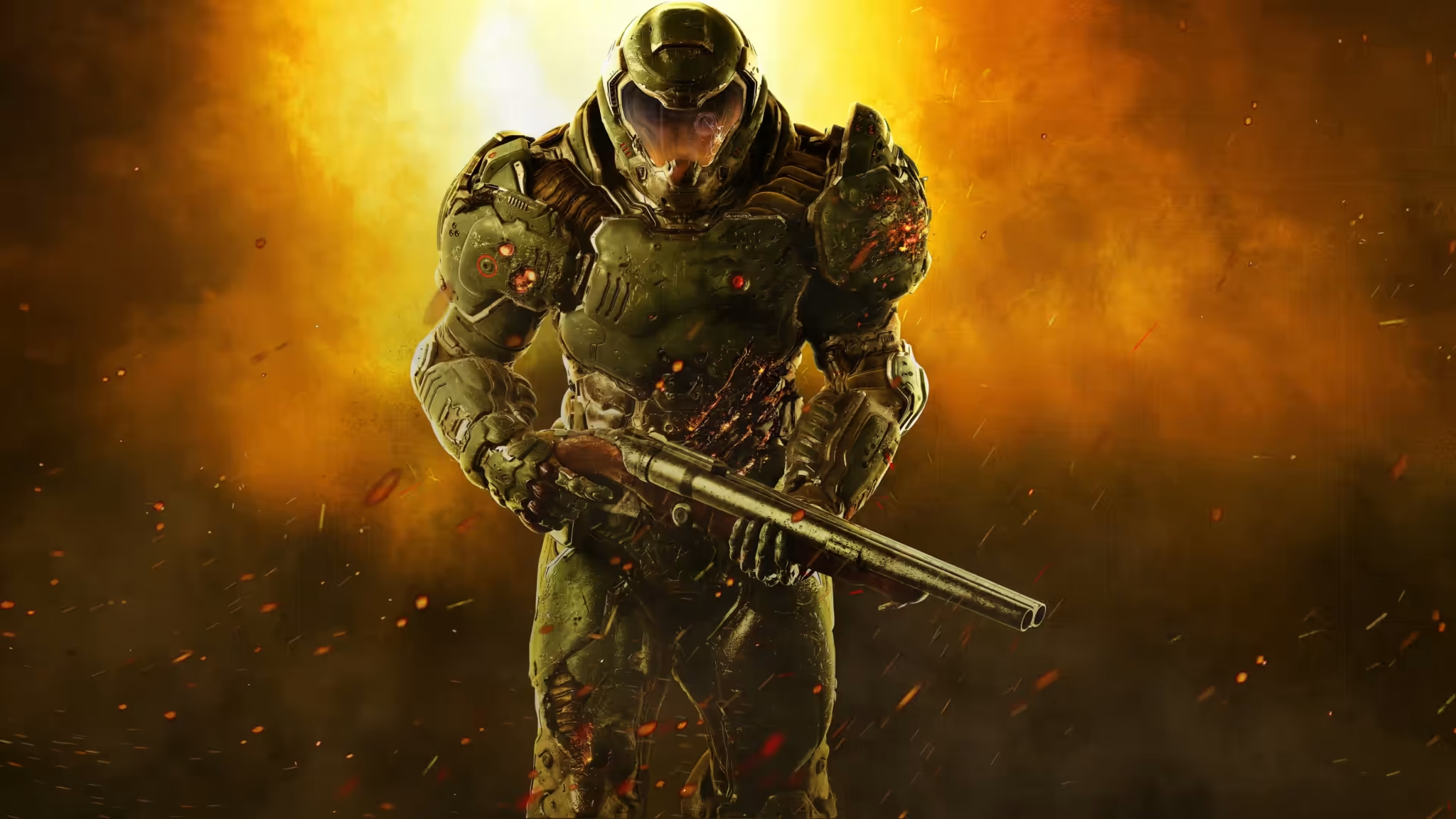
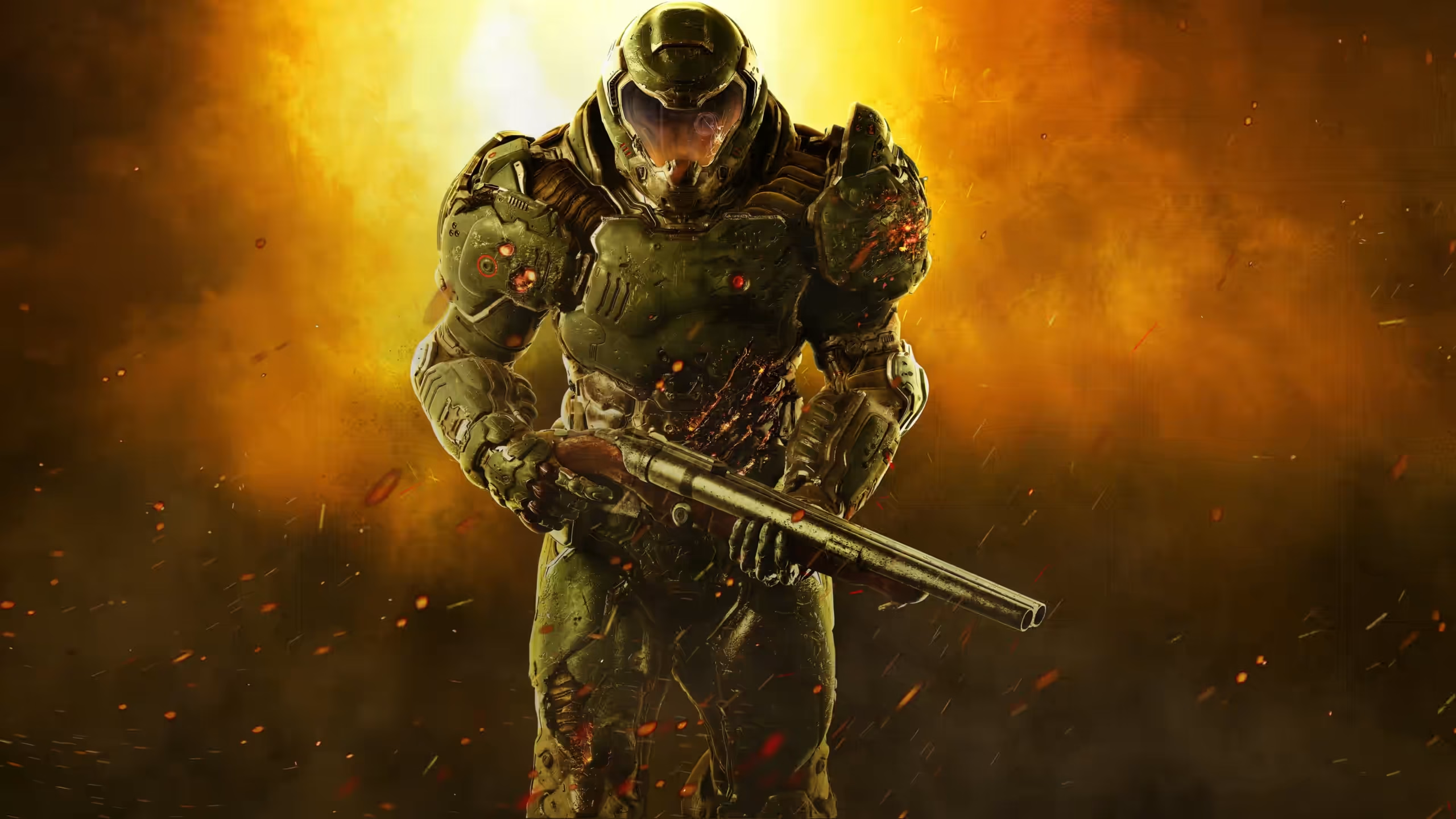
My favorite weapon was the Super Shotgun. Many encounters took place at close range, so it felt particularly effective. Fully upgrading it made the Super Shotgun even more satisfying when groups of enemies rushed me. I didn’t need to use it in every situation, but for my play style, it became the standout weapon.
Enemy Variety Keeps Combat Alive
One of DOOM (2016)‘s greatest gameplay strengths is its varied enemies. Small, agile monsters constantly harass you at close and long range. Medium-sized monsters create different problems: some charge, while others attack from above. Bigger demons are like tanks, with some still rushing forward and others relying more on their durability.
The game doesn’t need dozens of distinct monster types to make combat busy. When different enemies appear together, each demands a different response. I have to watch the fast-moving ones, dodge attacks from a distance, and find opportunities against stronger enemies. The result is often complete chaos, but it’s chaos I enjoy.
My most memorable battle took place in VEGA Central Processing, after riding a train and before reaching an elevator. The arena wasn’t very wide; it was long and narrow. That shape made it difficult to keep a safe distance while different enemies appeared and applied pressure. I felt forced to use nearly every combat tactic I knew. Moments like that kept DOOM (2016) exciting until the end.
Exploration and Hidden Areas Worth Finding
Combat isn’t the only thing I enjoyed. Exploring levels for hidden areas was fun too. Some secrets contain items, achievements, or upgrades. Discovering secret classic DOOM areas was especially exciting because they offered something different in the middle of the campaign.
Finding those secrets in DOOM (2016) isn’t always easy. Some paths are difficult to notice. One area might require a hidden switch, while another can only be accessed after passing a particular section. I didn’t discover every secret in each chapter. Some were missed accidentally; others were simply too difficult to find.
That creates a good reason to replay the campaign. After finishing, I can revisit levels to hunt for items and locations I overlooked. Players who enjoy exploration will appreciate that. If you just want to advance the story, however, searching every corner might not appeal to you.
Great Visuals, but the Detailed Map Can Be Confusing
I played DOOM (2016) using Vulkan and Ultra graphics settings. By my standards, the visuals were satisfying. Environments, monsters, animations, and combat effects looked good. I didn’t find any major visual flaw that hurt my experience. This is based on my own impression, not benchmark testing or a comparison with other games.
The interface is generally easy to understand. Menus and on-screen information were clear to me, including details needed during combat. The exception is the map. I think DOOM (2016) actually has a good map design because it’s detailed and can be viewed from different angles. Personally, though, I sometimes struggled to read it and work out which direction or route I should take.
That doesn’t make the map bad. Its design has strengths other players may appreciate, but the amount of detail and its presentation aren’t immediately intuitive for everyone, including me. I’d describe this as a matter of familiarity and readability rather than graphical quality.
A Simple Story That Keeps the Action Moving
Before judging the story, I should clarify that I didn’t follow every detail of DOOM (2016)‘s narrative. My attention was mostly on gameplay, and my English comprehension meant I missed some information. I still listened to dialogue and understood the broad outline of the character’s purpose and why the battles happened.
What I followed seemed simple and direct. I didn’t need to process complex explanations to understand what to do next. The story gives players a direction and a reason to fight monsters, while the main focus remains on action.
The conversations also feel largely one-sided because the protagonist doesn’t speak. That didn’t stop me enjoying the game, but the dialogue wasn’t especially memorable. Since I didn’t study the entire narrative closely, I won’t claim the story is extraordinary or particularly weak. My assessment is simply that I could follow its basic direction and that it suited the gameplay.
Rock and Metal Music Fuels the Action
The battle music left the strongest impression on me. When enemies arrived, the rock and metal soundtrack made the scenes feel more alive and the already fast combat more intense. Without that music, I think the action would feel considerably emptier.
Weapon sound effects are good too and make shooting satisfying. Not all aspects of the audio are equally strong, though. Some monster sounds felt lacking, while dialogue quality seemed ordinary. Environmental audio was often quiet, with wind-like sounds in some areas and unusual or mysterious noises in darker locations.
Overall, I consider DOOM (2016)‘s audio good and clean. Music is an important part of the combat, although monster sounds and dialogue didn’t leave nearly as strong an impression.
Comfortable Performance, Frustrating Crashes
Apart from one stability issue, DOOM (2016) ran comfortably. Controls remained responsive, and I didn’t have other major technical complaints. But one problem occurred too often to ignore: crashes during livestreams.
Across my livestream sessions, the game crashed each time, roughly once or twice per video segment. It would close itself and show a crash-report form that I could fill out or dismiss. Sometimes I had to repeat battles because the game closed before I could finish them. That’s particularly frustrating when you’re concentrating on tough enemies.
I don’t know what caused those crashes, so I won’t automatically blame Vulkan, Ultra settings, or livestreaming. I can only confirm they happened consistently during my recorded sessions. In a game that depends so heavily on combat momentum, interruptions like that were my most significant complaint.
Beyond the Campaign: Multiplayer, Arcade, and SnapMap
Finishing the campaign didn’t exhaust DOOM (2016)‘s content. I tried several additional modes, although I was more interested in some than others. It’s important to distinguish what I actually tested from features whose potential I haven’t explored in depth.
Multiplayer: Few Players, but Bots Remain
When I tried joining random public multiplayer matches, I couldn’t find other human players. I searched three times and waited around five minutes, but never got into a populated match. Public multiplayer seemed very quiet and difficult to access during my attempts.
Three searches aren’t enough to establish the state of every server or every region. But in my sessions, public multiplayer DOOM (2016) didn’t deliver what I wanted. Thankfully, there is a training mode with bots. I could try matches such as Team Deathmatch and adjust bot difficulty. That lets me experience at least some of the multiplayer content without relying on other people.
Arcade Mode: Challenging but Not My Favorite
Arcade Mode provides a different type of challenge, centered on earning a high score. To do well, players need to know the maps, anticipate enemy spawn locations, and understand timing. That could be very appealing if you like repeating challenges until you find the most efficient approach.
Personally, I’m not a huge fan of chasing high scores. I can enjoy Arcade Mode occasionally, but I’m not interested in replaying it hundreds of times to improve a number. Although DOOM (2016) includes it, the mode adds less value for me than for people who enjoy score competition. That’s a matter of taste, not proof that the mode is bad.
SnapMap: Huge Replay Potential
Of the extra modes I tried, SnapMap seemed to have some of the most interesting potential. It lets players experience community-created maps and custom scenarios, and also create their own content. I saw several possibilities: arcade challenges, player-made stories, custom campaigns, and battle arenas with unique concepts.
I need to be clear about my limits here: I only tested a few SnapMap experiences briefly for this review. I haven’t explored the mode extensively, so I can’t judge the overall quality of available maps. Community creations can vary. Some may be excellent, while others might feel odd or simply not suit my tastes. That’s a possibility, not a specific criticism drawn from extensive play.
Even with limited hands-on time, I think SnapMap gives DOOM (2016) considerable replay potential. If Arcade Mode gets boring, there are other types of experiences to try. For people who like experimentation and variety, that’s valuable. I also see it as a reason to return to the game someday.
Price and Replayability: Rp53,000 Was a Bargain
For the money I spent, DOOM (2016) was excellent value. I paid Rp53,000 on sale, well below the Rp266,000 regular price I saw. That gave me roughly 13 hours of campaign gameplay and several other activities I could still try.
But value differs between players. If someone only wants to finish the campaign once or twice, paying full price deserves consideration. If they love hunting secrets, replaying on different difficulties, chasing Arcade scores, fighting bots, or exploring SnapMap creations, even full price could feel worthwhile over time.
That’s why I think the replay potential is so high. Not because I’ve personally replayed every mode extensively, but because the available activities are diverse. I still have campaign secrets to find, higher difficulty settings offer new challenges, and additional modes provide different goals. If you’re looking for one purchase that can keep you occupied for a long time, that variety matters.
I didn’t play any additional paid gameplay DLC. The separate extra I knew about was the soundtrack, so I’m not including other paid content in my value assessment.
Who Should Play DOOM (2016)?
I recommend DOOM (2016) mainly to FPS fans who enjoy fast action and a high level of challenge. If you like constant movement, dodging attacks from different directions, quickly choosing weapons, and fighting tactically in demanding arenas, there’s plenty to enjoy. Searching every corner for secrets also gives explorers reasons not to rush.
I wouldn’t recommend it as enthusiastically to players who dislike high-speed shooters or become overwhelmed when too many things happen at once. Difficulty settings let you adjust the experience, but the gameplay I enjoyed is built around action and quick reactions. Players with different preferences may not find it equally appealing.
Conclusion
I was satisfied after completing DOOM (2016)‘s campaign. The roughly 13-hour journey had its ups and downs, mainly because I needed to learn fast weapon switching and experienced repeated livestream crashes. But moving to Ultra-Violence in Chapter 3 made the fights much more enjoyable. Responsive gunplay, varied enemies, intense music, and hidden areas kept me engaged through the end.
The other selling point is replayability. I may not want to chase Arcade scores repeatedly, and I’ve barely explored SnapMap, but the range of modes gives the game plenty of content. At Rp53,000 on sale, it was an excellent purchase. At full price, I’d consider how much of the extra content I would actually play.
Is DOOM (2016) worth trying? I think so, especially if you love challenging shooters and don’t mind learning to make fast decisions during combat. I enjoyed completing it, but I don’t feel entirely finished with everything it has to offer. I’d like to return to it someday. I’ve also reviewed DOOM: The Dark Ages on Wordtura.