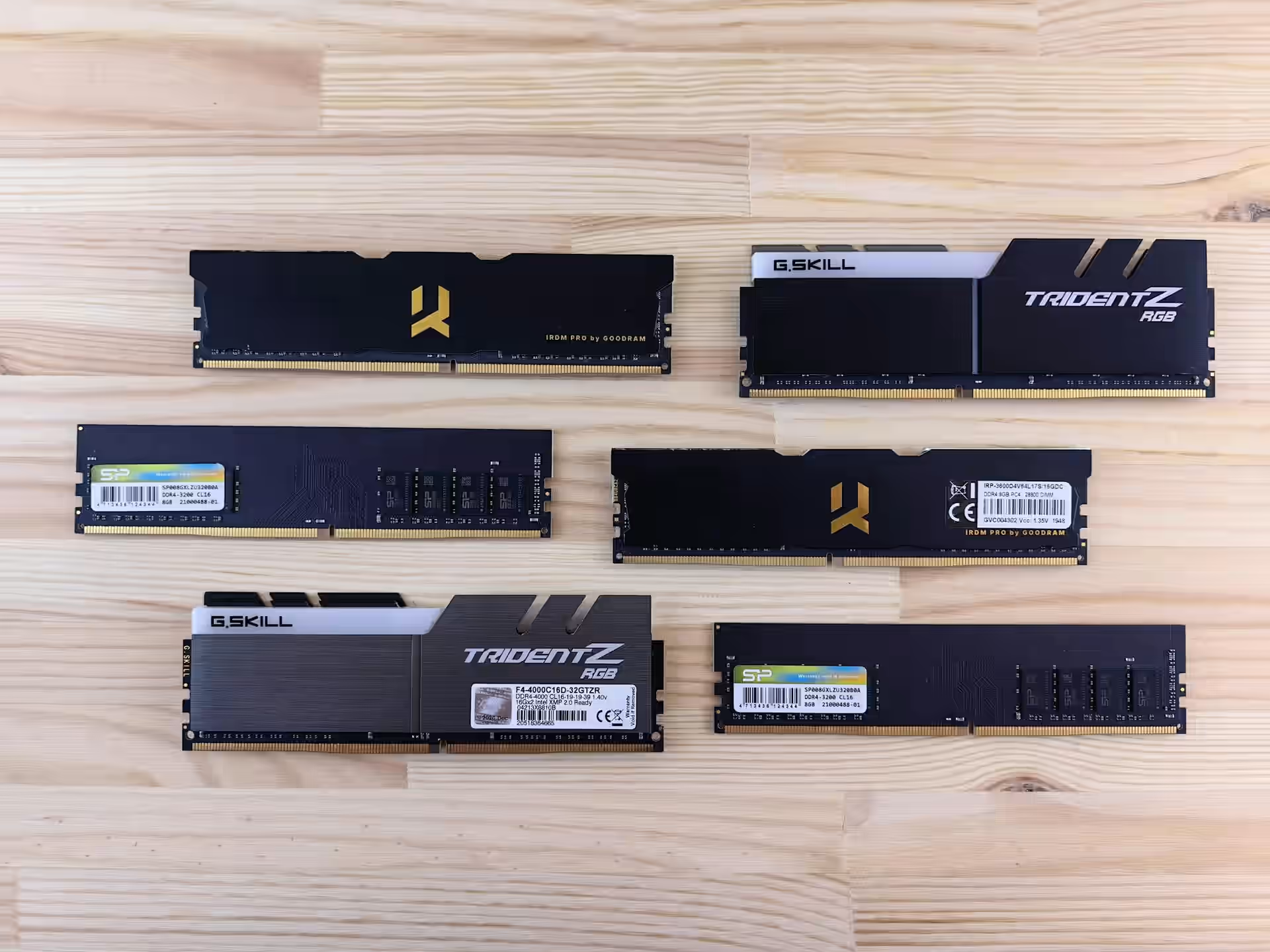

RAM prices increased substantially from mid-2024 and remained under pressure through 2025. This wasn’t simply a brief market fluctuation. Memory makers’ strategic decisions, growing demand for AI infrastructure, and panic buying or stockpiling all contributed. Shoppers saw higher RAM prices at retail, but many causes lay further up the supply chain. This late-2025 analysis examines DRAM manufacturing, AI data centers, DDR4 and DDR5, market signals, Indonesia’s particular challenges, and possible responses. Its projections are historical, not a live November 2026 price forecast.
Executive summary
- Trend: Memory modules for desktops, laptops, and servers became significantly more expensive from 2024 onward.
- Primary causes: Production shifted toward higher-value HBM and server DRAM as AI demand grew. The DDR4-to-DDR5 transition and defensive purchasing by distributors and integrators added pressure.
- Effects: More costly PC builds, changing OEM specifications, uneven retail availability, and higher expenses for professional creators.
- Original forecast: Pressure was expected to persist through at least 2026, with a possible extension into 2027–2028 if AI demand kept growing.
- Main recommendation: Plan purchases according to medium-term needs. Businesses should secure reasonable supply commitments without hoarding inventory unnecessarily.
How the DRAM supply chain works
From silicon wafers to finished RAM modules
RAM prices are sensitive to shortages because DRAM goes through a complex manufacturing chain. Production starts with silicon wafers, which undergo precise lithography processes to form memory cells. The resulting chips, or dies, are cut, initially tested, and packaged so they can be mounted onto circuit boards.
Packaged DRAM is then sorted through binning, which classifies chips by performance, stability, and electrical characteristics. This determines suitable speeds, voltages, and applications, including consumer or server use. Qualified chips are assembled into DIMMs or SO-DIMMs, tested once more, and distributed.
These stages are interdependent. A lower wafer yield, a packaging delay, or changes in chip allocation can disrupt global supply. Strict quality tolerances prevent instant adjustments. As a result, strong demand from one segment, such as AI servers, can influence consumer RAM availability and RAM prices.
DRAM also differs from NAND flash in its stringent timing and stability requirements. Validation is demanding, while NAND provides other options for density and product segmentation. DRAM production faces technical bottlenecks that limit how quickly output can scale.
Why DRAM capacity cannot expand quickly
Manufacturers cannot increase production simply by turning on more machines. A new semiconductor fabrication plant can take years, require tens of billions of dollars, and depend on environmental approvals and advanced lithography equipment. Even when construction ends, the facility must ramp up production and achieve stable yields.
Yield rate measures the share of chips meeting their specifications. Low yields mean some dies must be discarded or sold in lower tiers, reducing the effective supply of high-grade products. Each new process node also needs lengthy reliability testing, particularly for enterprise and server memory.
Memory makers remember earlier periods of overcapacity, when aggressive investment produced too much supply and steep price declines. That history encourages caution. Investment risk, production complexity, and ramp-up times explain why DRAM output cannot immediately match a surge in demand or reduce RAM prices quickly.
AI and data centers: major demand drivers
AI memory requirements versus consumer PCs
The expansion of AI systems and data centers changed the composition of memory demand. AI servers often use ECC memory, RDIMMs, LRDIMMs, and HBM (High Bandwidth Memory) for high reliability, large capacity, or extreme bandwidth. These components command higher prices and draw heavily on manufacturing resources.
The quantities are different too. A large AI server rack may contain numerous compute nodes using hundreds of gigabytes to several terabytes of memory each. As a rough illustration, the memory in one large rack can equal that of hundreds of household PCs with 16–32 GB each. A comparatively small group of corporate buyers can therefore create enormous demand.
For manufacturers, AI and data-center products offer attractive margins, predictable volumes, and long-term contracts. Directing wafer capacity to that segment makes commercial sense, but can reduce the share available to consumer modules and put upward pressure on RAM prices.
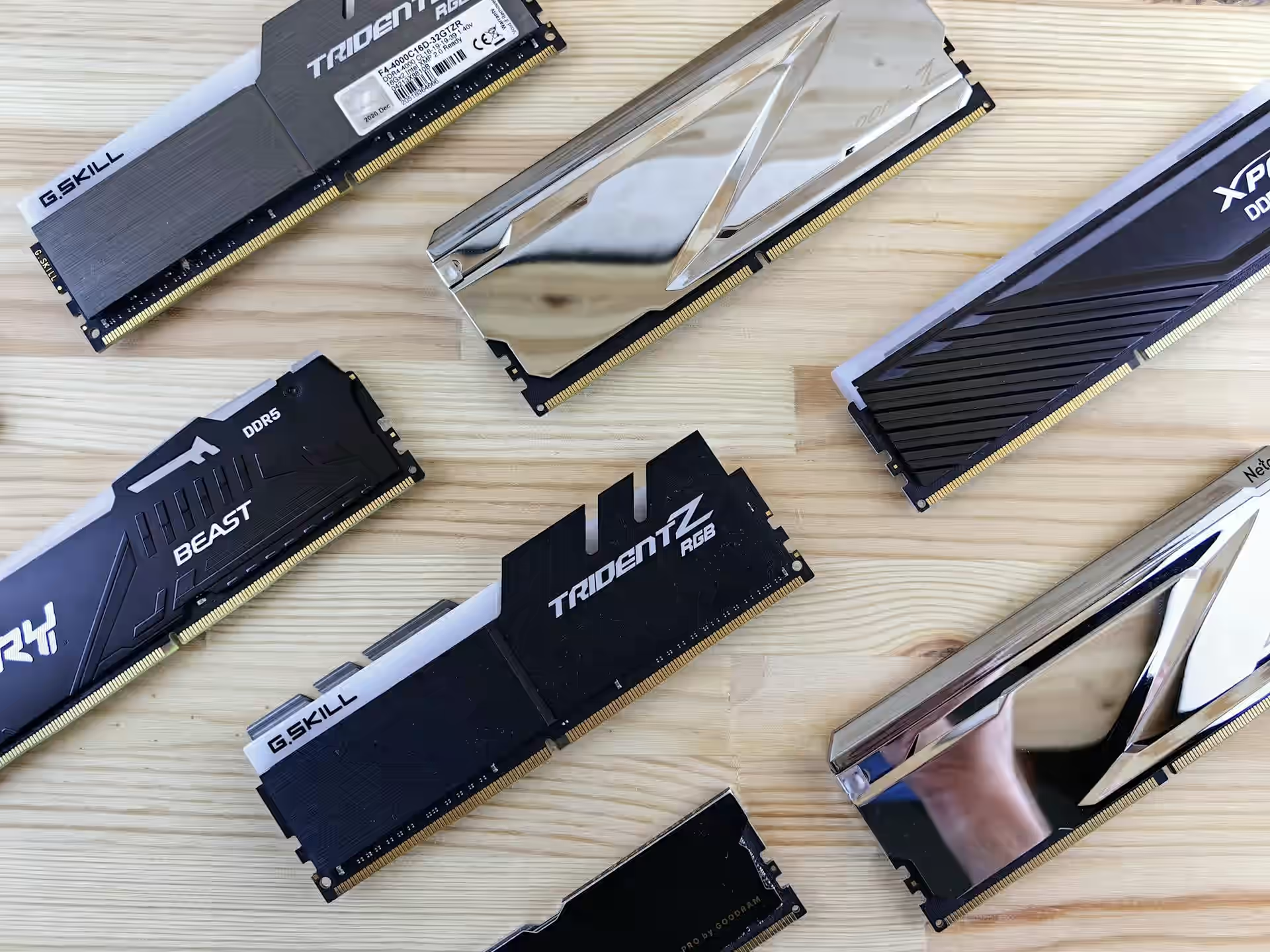
Long-term contracts can reserve capacity
Hyperscalers and large data-center operators often purchase memory far in advance rather than relying on the spot market. Long-term contracts may commit suppliers to specific volumes and delivery schedules even before new computing facilities are finished.
Once much of a factory’s future output is reserved for enterprise customers, less remains on the open market. If demand stays firm, spot prices can rise rapidly. Distributors and PC integrators buying on that market must pay more, passing the increase on through retail RAM prices.
Individual PC buyers generally don’t have the volume or contractual leverage of large enterprise customers. In the original article’s analysis, continued AI expansion and renewals of major contracts could keep consumer supply under pressure for some time.
Manufacturer statements: capital spending versus usable output
Some manufacturers discussed greater investment or capital expenditure (capex) while prioritizing enterprise orders. However, factory construction, equipment installation, and validation may take roughly 12–36 months. Announced investment therefore doesn’t mean an immediate increase in available chips or a quick reduction in RAM prices.
How Samsung, SK hynix, and Micron approached the market
The original analysis examined three major DRAM suppliers and their production priorities. These descriptions reflect the period discussed in the Indonesian article rather than every subsequent business decision.
Samsung: high-value products and HBM
Samsung increased its focus on HBM and server DRAM to meet AI accelerator and data-center demand. Higher margins and long contracts make these attractive products. Reserving more capacity for them can leave fewer wafers for consumer DIMMs and laptop SO-DIMMs, narrowing retail availability. Samsung’s expansion plans also illustrate why additional supply takes time.
SK hynix: balancing HBM and consumer DRAM
SK hynix likewise expanded production supporting AI, particularly HBM, while trying to balance enterprise and consumer requirements. Surges in corporate demand can result in less supply reaching retail first. Shortages of specific memory SKUs can then affect availability and prices internationally and in Indonesia.
Micron: shifting priorities, not shutting down DRAM
Some market discussions characterized Micron as ‘leaving consumer RAM.’ The Indonesian article made a more limited distinction: Micron was prioritizing data-center, AI, and enterprise customers, not ending all DRAM manufacturing. Reduced retail distribution can feel like a withdrawal to builders and distributors. This is a summary of the source’s original analysis, not a claim about every later Micron product or retail-brand decision.
Panic buying and the hardware market
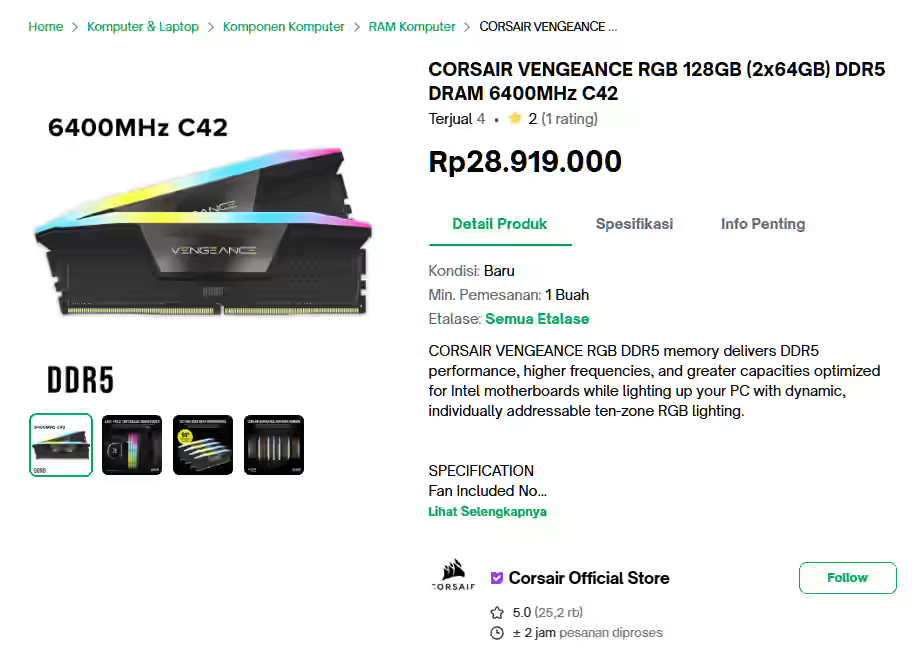
Panic buying also happens between businesses
People often imagine panic buying as households purchasing products because they fear shortages. But in the RAM market, business-to-business buyers may have greater influence. Distributors, system integrators, and OEMs can buy at a scale far beyond the typical consumer. When they see signs of supply trouble in reports, supplier announcements, or spot prices, they may secure more stock early.
The difference is mostly scale and consequence. Consumer panic purchases tend to be scattered. Major distributors and OEMs can absorb significant spot-market supply at once. They may be protecting manufacturing schedules or existing orders rather than speculating, yet their actions still reduce available stock and can intensify price increases.
How higher costs reach retailers
A rise in international DRAM or memory-module spot prices can cascade through distributors, PC assemblers, and shops. Businesses increase their selling prices to cover higher acquisition costs and protect margins, and end customers pay more.
RAM prices often rise faster than they fall. Even if international RAM prices improve, shops may still have inventory purchased at a higher price. They may hesitate to reduce prices until old stock sells or the market stabilizes. That asymmetry can prolong high retail prices after the original disruption weakens.
DDR4 versus DDR5: an uneven transition
The myth that older technology always costs less
Older hardware doesn’t necessarily keep getting cheaper when a replacement arrives. Manufacturers may stop producing a standard faster than its users stop needing it. Certain DDR3 modules rose in price toward the end of production; specialized hard-drive models can experience similar scarcity after being discontinued.
DDR4 remains essential for many older PCs, certain enterprise servers, industrial equipment, and embedded systems. As manufacturers reduce DDR4 output in favor of DDR5 and HBM, supply can shrink faster than demand. Some DDR4 capacities or speed grades can become unusually scarce, causing RAM prices to rise despite the technology’s age.
Why DDR5 doesn’t immediately bring down RAM prices
Newer DDR5 did not immediately solve the pricing problem. In its early adoption period, manufacturing costs were higher than for DDR4 because of added complexity, module components, and less mature production processes. Lower early yields could further limit the usable supply.
Consumer DDR5 also competes with server DDR5. New enterprise systems demand the same generation of memory, often with better margins for suppliers. DDR4 may rise in price due to shrinking output, while DDR5 remains costly because of its production requirements and server competition. Together, those forces complicate the transition and keep RAM prices under pressure.
Market evidence: signs that higher RAM prices were real
The original report cited several indicators of higher RAM prices across markets, rather than an isolated local event:
- DRAM spot prices rising during multiple market-monitoring periods.
- Quarterly revisions to DRAM contract prices reported by industry analysts.
- Previously common memory SKUs becoming harder to find in retail stores.
- Distributors shifting inventory policies and introducing more dynamic prices.
These indicators collectively pointed toward global demand and manufacturing-allocation pressures behind the increases discussed in the article.
Effects on Indonesia’s RAM market
The rupiah adds another layer to component prices
RAM prices can feel especially severe in Indonesia because exchange rates matter. Memory is commonly traded internationally in US dollars. When the world-market price rises and the rupiah weakens, the increase compounds in Indonesian RAM prices.
Other expenses include shipping, logistics insurance, import duties, and domestic distribution margins. Shoppers rarely see these costs separately, but all of them affect retail prices. Indonesia’s reliance on imported components makes the market sensitive to international prices and currency movements.
The same factors help explain why a fall in international prices may take longer to reach Indonesian shops. Distributors might still hold stock bought at unfavorable exchange rates or higher wholesale prices, delaying reductions.
Large stores and small shops follow different pricing strategies
Larger stores with high sales volumes and direct distributor access may use market-based pricing. Their tags can change quickly as wholesale costs or spot-market conditions shift.
Smaller retailers often keep prices fixed for stock already on hand, at least temporarily. They may offer lower prices on some items, but they usually have more limited quantities or a narrower choice of SKUs. Identical RAM kits can therefore carry very different prices across marketplaces.
Differences in RAM prices can look irrational to customers, but may reflect how each seller manages inventory and price risk. As long as supply and exchange rates remain uncertain, differences between retailers may persist.
Domestic policy options to cushion RAM price rises
Indonesia depends heavily on imports for semiconductor components, which increases exposure to global price and supply fluctuations. The original article discussed domestic measures that could ease some of the impact, although none would fully remove the global causes.
One possibility is temporary import incentives, such as adjusting tariffs on certain electronic components. Such measures would aim to keep supplies moving rather than dramatically lowering all retail prices.
Another possibility is supporting local assembly and investment. Even without fabricating DRAM domestically, greater local component integration or assembly could gradually reduce reliance on finished imports. This would require a longer investment horizon.
Training workers for assembly, testing, and system integration could also strengthen the local hardware sector. These strategies would not change global AI demand or manufacturers’ allocation decisions; they would help Indonesia respond more effectively to outside disruptions.
Implications for gamers, creators, and professionals
For gamers and DIY builders, rising RAM prices change the economics of a PC build. A capacity such as 32 GB may require more money than expected, encouraging some people to delay upgrades or use a less expensive configuration.
Creators and professionals who need considerable memory face a broader choice. Is local hardware still worth buying, or could renting cloud services or a rendering farm be cheaper for short-term work? The answer depends on the workload, required time, and how often the equipment would be used.
Long-term implications for the technology industry
Effects on product design and standard specifications
Long-lasting RAM price increases can influence product design, not only immediate buying decisions. Laptop and prebuilt-PC makers may revise default memory configurations to keep products competitively priced. Higher capacities can move from standard equipment to more expensive options.
That also changes marketing. Additional RAM becomes a premium upgrade rather than an expected baseline. Buyers with demanding workloads may need to pay much more for suitable specifications. Over time, lower default capacities could leave mid-range machines less comfortable for modern applications without paid upgrades.
Software efficiency as a response to hardware costs
Higher RAM prices also encourage software optimization. Developers can reduce application memory footprints, improve allocation and management, or rely more on compression and caching.
Some businesses may temporarily move memory-heavy tasks, such as rendering, data analytics, and model training, to flexible cloud infrastructure. Cloud services won’t replace every local workstation, but they can reduce the need to buy hardware at the peak of a costly market cycle. Efficient software and elastic infrastructure offer ways to cushion future supply disruptions.
How long could prices take to stabilize? Three original scenarios
Predicting an exact date for normal RAM prices requires assumptions. The original late-2025 analysis offered three scenarios:
- Optimistic (6–9 months): Panic buying subsides and DDR5 output rises, easing pressure around mid-to-late 2026.
- Moderate: Higher prices continue through 2026–2027, with certain memory variants still difficult to obtain.
- Pessimistic: If AI demand grows quickly and new capacity is delayed, elevated prices persist into 2027–2028.
The outcome would depend on how quickly factories expand, AI demand in later quarters, and market behavior, including whether stockpiling stops. These are historical scenarios from the source, not fresh forecasts made in November 2026.
Conclusion
RAM price increases beginning in 2024 reflected a mixture of structural forces and market behavior: growing AI demand, capacity shifting to higher-value memory, transitions between standards, and defensive purchasing by distributors. Their impact extended from gamers and creators to OEMs and policymakers. Addressing them requires better purchasing plans, longer-term supply arrangements, suitable domestic policies, and investment in manufacturing capacity.
Wordtura readers should make buying decisions according to medium-term needs rather than panic about short-term price changes. Compare suppliers, monitor manufacturer information, and think carefully about whether an upgrade is necessary while RAM prices are high. For another PC hardware decision, see Wordtura’s gaming monitor refresh-rate guide.
FAQ: Rising RAM prices
Why did RAM prices increase from 2024 through 2025?
The source identified multiple causes. AI data centers consumed more DRAM production capacity, manufacturers shifted resources to higher-margin products, and consumer supply tightened. The DDR4-to-DDR5 transition and distributor stockpiling added further pressure.
Are RAM prices likely to fall soon?
The late-2025 forecast anticipated limited immediate relief, potentially lasting through 2026 or longer if AI demand remained strong and new production capacity arrived slowly. This is a historical outlook, not an updated prediction.
Does AI actually affect consumer RAM prices?
Yes. AI infrastructure uses substantial server DRAM and HBM, often at scales far beyond a consumer PC. Prioritizing these higher-margin products can reduce available consumer RAM supply and increase prices.
Should I buy RAM now or wait for the market to stabilize?
Buy based on what you actually need, not on a perfect prediction of market prices. Essential memory for work may justify buying sooner. If an upgrade is optional, waiting and comparing offers could reduce the risk of purchasing at a price peak.
Is DDR4 still worth buying with higher RAM prices?
DDR4 remains important for many systems, but some kits can become scarce as production shifts elsewhere. Buy it when your system requires DDR4 and the price per gigabyte is reasonable.
Why can RAM cost more in Indonesia than in other countries?
International RAM prices are often set in US dollars. Exchange rates, import costs, freight, and domestic distribution can amplify increases in Indonesia and delay price reductions.
Main references
The original article cited market research and reporting from TrendForce, Counterpoint Research, Reuters, and EE Times Asia. It also drew on public manufacturer information from Samsung Electronics, SK hynix, and Micron Technology, alongside technical materials about DRAM, DDR4, DDR5, and HBM.