
When people think of horror games, they often picture sudden jump scares intended to startle them. Dead Space Remake (2023) does have moments like that, but I think focusing on them misses what makes this game frightening.
After finishing Dead Space Remake on PC on Medium difficulty, I felt that it wasn’t a horror game relying only on momentary shocks. Instead, it slowly builds fear through atmosphere, sound design, hallucinations, and the feeling that nowhere aboard the USG Ishimura is truly safe.
That feeling starts early and persists until the credits roll. Even when there are no enemies in sight, I remained wary of every corridor, sound, and room ahead.
For context, I didn’t play the DLC because it only contained skins, and I haven’t tried New Game+ because I don’t plan to move on to Dead Space 2 anytime soon. This review is based solely on finishing the main story.
Dead Space Remake gave me a very satisfying survival-horror experience. Still, it has a few shortcomings worth discussing openly.
Dead Space Remake (2023) Review in Video Form
Watch the video version of my review below. If you’d rather watch than read, click here to open it.
Gameplay
If I had to describe Dead Space Remake’s gameplay in two words, they’d be survival horror. This isn’t just a label. Nearly every game mechanic supports that idea.
Right from the start, I had to think before firing. Ammunition is available, but never in excessive amounts. Medkits, bullets, and inventory space must be managed carefully, so each decision matters.
What I liked most was never feeling entirely safe. An empty-looking corridor might still be dangerous. Opening another door doesn’t necessarily bring relief. Even revisiting a familiar area can be frightening.
Backtracking, which can be boring in other games, became a strength here. Usually, returning to old areas feels repetitive. In Dead Space Remake, I developed something like a fear of places I’d already visited, wondering whether something might have changed since my last visit. Going back and forth therefore increased the tension rather than becoming tedious.
Dismemberment Is More Than a Gimmick
If one mechanic defines Dead Space Remake for me, it’s dismemberment: cutting off an enemy’s limbs. Many horror games encourage headshots as the quickest way to kill a monster, but Dead Space Remake turns that idea on its head.
Shooting a Necromorph in the head often isn’t the best option; sometimes it even makes the creature more aggressive. Body shots also waste ammunition. Cutting off its arms or legs is usually the most effective strategy.
That’s what makes the combat distinctive. Dismemberment isn’t a decorative effect or gimmick. It’s central to how you fight. Without understanding it, players will use far more ammunition than necessary. I like how this design makes combat different from most shooters.
The Plasma Cutter Remains My Main Weapon
My favorite weapon throughout the game was the Plasma Cutter. Its ammunition was relatively easy to find, it offered precise aiming, and it was extremely effective at removing Necromorph limbs.
I upgraded several weapons during the campaign, but I kept returning to the Plasma Cutter because it worked consistently across situations. Upgrading equipment felt rewarding, with improvements that encouraged further investment without becoming excessive.
Combat That Stays Tense
The combat consistently kept me tense. Not because enemy attacks were impossibly difficult to dodge, but because I had to manage resources constantly. Ammunition, medkits, inventory space, and positioning all affect one another, making every encounter risky.
Enemy variety is decent, although their attack patterns become easier to predict over time. Thankfully, changes in the environment and the oppressive atmosphere keep combat interesting through to the end.
Medium difficulty felt well judged: neither too easy nor punishing. It lets players enjoy the atmosphere while keeping the tension that defines Dead Space.
Hunter Is Scarier Than the Final Boss
The most memorable enemy for me wasn’t the final boss. It was the Necromorph Hunter. Whenever Hunter appeared, the situation almost always turned into panic. Ammunition disappeared quickly, medkits dwindled, and Hunter often trapped Isaac near doorways as I tried to escape.
For me, Hunter inspired far more fear than the final boss. The final boss battle, by contrast, was fairly ordinary. Its movements were easy to learn and relatively simple to dodge, so it didn’t leave much of an impression.
Zero Gravity Adds Variety but Can Be Confusing
I also enjoyed the Zero Gravity areas. They add welcome gameplay variety, preventing the entire game from becoming a cycle of walking through corridors and shooting enemies.
Zero Gravity has its drawbacks, though. In large areas, I could still keep track of my orientation. In cramped, dark spaces with several passages, I sometimes felt dizzy trying to find my way while remaining alert for Necromorphs. Even so, I think the mechanic successfully refreshes the gameplay.
My Biggest Criticism: Too Few Puzzle Clues
My biggest gameplay complaint is the lack of clear puzzle hints. Dead Space Remake wants players to feel immersed in the USG Ishimura, so many clues aren’t presented plainly on screen. Instead, hints are built into the environment, writing on in-world objects, or visual details players must notice themselves.
That approach makes the experience highly immersive. But some puzzles become more confusing than they need to be, especially when you’re panicking or being chased. Some players may appreciate that, but I found several moments where slightly clearer guidance would have helped without harming the horror atmosphere.
Visuals and World Design
Dead Space Remake’s visuals immediately caught my attention. The 2023 remake looks excellent, but it’s not merely the sharper textures or modern lighting that impress me. It’s how those elements are used to create horror.
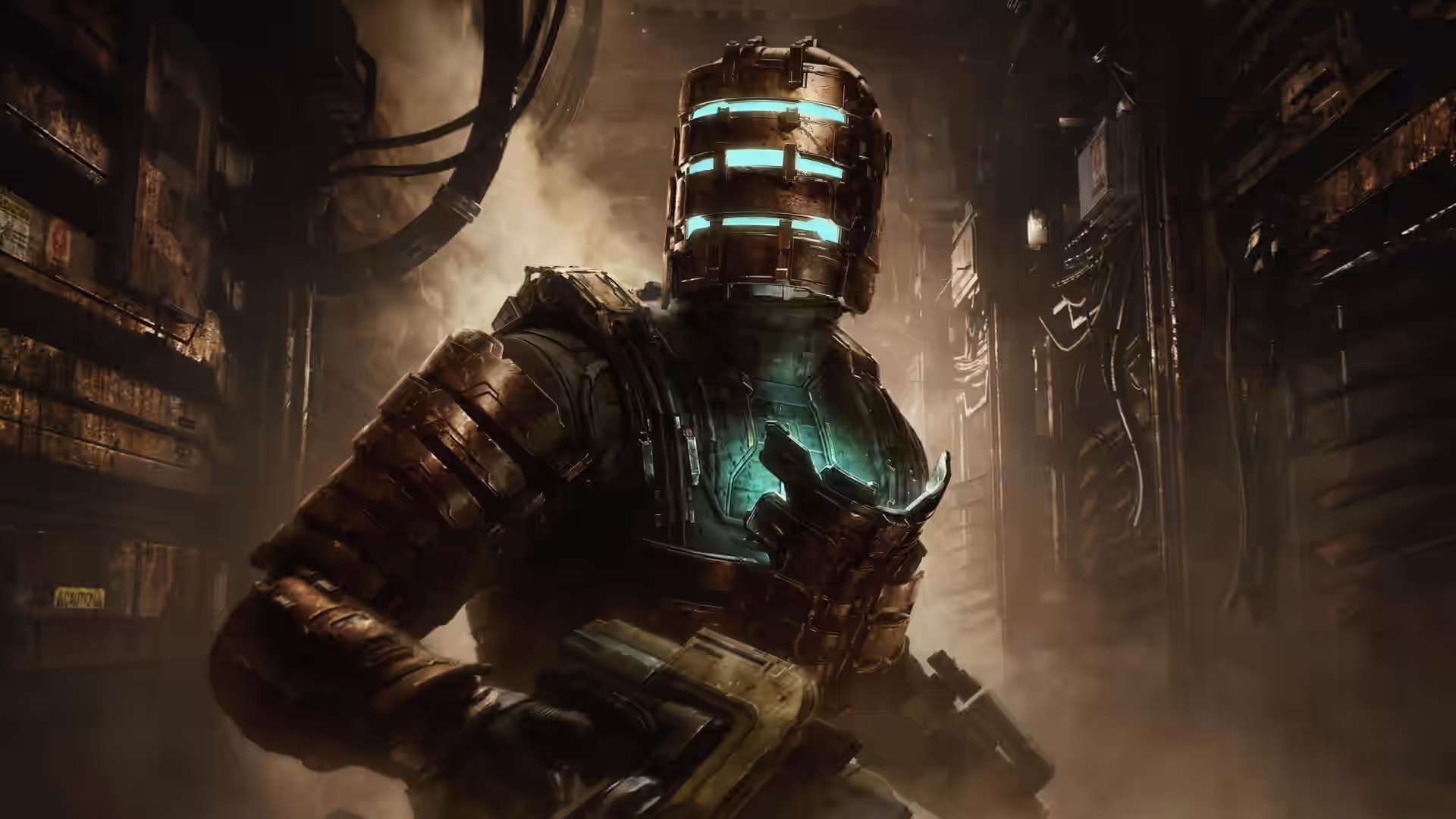
The USG Ishimura isn’t a magnificent or beautiful spaceship. Its corridors, rooms, and service passageways feel abandoned and increasingly nightmarish. The ship becomes frightening without always putting enemies in front of you. Even in empty hallways, I was tense each time I opened another door.
That’s one reason the atmosphere works so well. The game doesn’t force constant battles; it lets the environment speak. Dim lights, narrow corridors, bloodstains, the sounds of ship machinery, and silent rooms create a lingering discomfort even when nothing is attacking.
Gore That Supports Gameplay
Dead Space is known for its gore, and the remake portrays it very effectively. Blood, severed body parts, and damaged Necromorphs look convincingly gruesome.
The gore isn’t there merely to look violent, though. It directly supports the dismemberment system. Cutting off a limb produces an immediate visual result, giving each shot a clear consequence and making a well-aimed victory more satisfying. The gore feels connected to the gameplay rather than added for decoration.
Unsettling Enemy Animations
I also think Necromorph animations are excellent. Their abnormal, unsettling movements keep you alert. Even after several hours, when attack patterns become more predictable, their animations remain disturbing, especially when a creature appears unexpectedly or enters a room that seemed safe.
An Immersive Interface
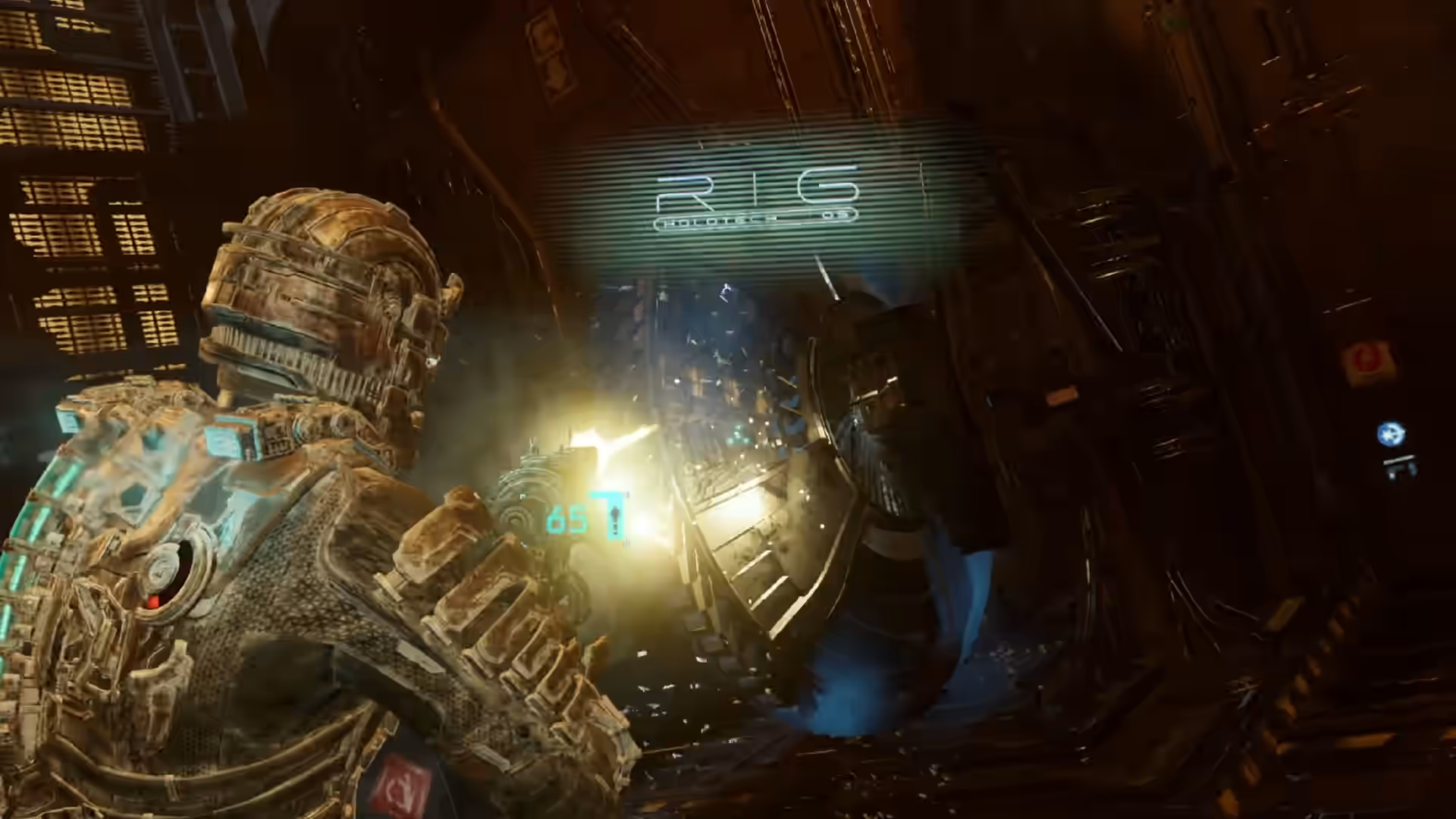
One of my favorite design choices is the interface. Dead Space Remake doesn’t simply overlay its UI on the screen. Important information such as Isaac’s health is integrated into his body.
At first, that takes some adjustment, especially if you’re used to seeing health bars and ammunition counters in screen corners. Once I got used to it, however, the approach made everything more immersive. The HUD rarely bothered me because information fit naturally into the world, strengthening the feeling of actually being aboard the USG Ishimura.
Zero Gravity Makes Environments Feel More Alive
Zero Gravity adds visual variety as well as gameplay variety. Rooms that initially look ordinary become spaces where you have to watch movement from several directions. The remake uses weightlessness not just as a mechanic but to make environments feel more active and less repetitive.
Story and Characters
Compared with many survival-horror games, I find Dead Space Remake’s story much more interesting. The premise is straightforward: Isaac Clarke arrives aboard the USG Ishimura to repair the ship, but the job turns into a fight for survival when Necromorphs overrun it and Isaac starts experiencing hallucinations early on.
That simple premise develops into a story I enjoyed following. I wasn’t only interested in fighting monsters, but also in gradually uncovering the mysteries aboard the ship. The further I went, the more questions emerged, keeping me curious enough to finish the game.
Horror Built Through Storytelling
Dead Space Remake stands out to me in how it creates fear. Many horror games try to scare players with frequent jump scares. This remake has some, but they’re not its main strength.
The real horror comes from the atmosphere, strange sounds, whispers, hallucinations, and the constant feeling of being unsafe aboard the USG Ishimura. These elements support the story, so the fear doesn’t feel forced. Instead, I gradually felt some of the psychological pressure Isaac experiences. That’s why I don’t see Dead Space Remake as cheap jump-scare horror.
Isaac Clarke: A Memorable Protagonist
I found Isaac to be a memorable protagonist. He isn’t merely someone moving from room to room shooting enemies. His mental state is important to the story, and the hallucinations repeatedly make you question what’s actually happening. That makes his experience more interesting than a straightforward survival story.
The supporting characters are interesting enough and help the story develop without distracting from the main experience.
Consistent Pacing
I think the story is paced well. It doesn’t rush to reveal its mysteries, but it doesn’t keep you waiting too long either. Each chapter has a clear purpose, maintaining curiosity until the end and making the psychological tension more effective.
Hunter: The Moment I Remember Most
As mentioned earlier, encountering Necromorph Hunter was the most memorable part of my playthrough. It wasn’t just the gameplay pressure: Hunter’s arrival often felt like a turning point in a chapter’s tension. When the ship was dark or the power went out, that pressure became even worse. Hunter affected me far more than the final boss and showed how well Dead Space Remake could frighten me without constantly relying on jump scares.
Audio and Music
If I had to praise one part of Dead Space Remake above all others, it would be the audio. It doesn’t merely have good effects; it uses sound as one of its main tools for creating fear.
Footsteps, ship machinery, faint whispers, and unexplained noises kept me alert throughout. Even without a Necromorph in sight, the audio made me imagine something could appear at any moment. That’s why I don’t think the game relies mainly on jump scares. Its strongest horror comes from sound design and atmosphere.
The sounds put constant pressure on you. Sometimes it’s only a whisper, a bang, or a noise that’s difficult to identify, yet it makes the environment uncomfortable. The longer I played, the more I felt that fear was being built gradually instead of through repeated sudden surprises.
I think the music is outstanding too. It doesn’t merely accompany scenes; it intensifies them. When danger escalates, the score increases the pressure. When things seem quiet, I become suspicious because the game so often makes you feel safe right before something frightening happens.
The voice acting is good as well. It isn’t necessarily the most outstanding element, but the dialogue is delivered naturally and supports the story’s serious tone. Overall, audio is one of the biggest reasons Dead Space Remake feels so immersive.
Performance and Stability
On PC, Dead Space Remake was generally stable during my playthrough. I didn’t encounter major bugs that ruined progress. A few minor bugs appeared, but they weren’t serious, and sometimes they even added to the panic.
Unfortunately, one problem can’t be ignored: stuttering. This is my biggest criticism of the remake. It doesn’t happen all the time, but when it does during a tense moment, the disruption is significant. Being chased by a Necromorph is stressful enough without the game suddenly freezing or hitching.
I found a setting that helped reduce stutter: limiting the frame rate to 60 FPS while enabling V-Sync. After making those changes, the stutter was far less noticeable, although it didn’t disappear completely.
Another annoying bug involved doors or narrow intersections. If I stunned Necromorph Hunter and it started regenerating in a doorway or tight passage, I couldn’t get past it. I became trapped until Hunter finished regenerating and moved away from the door.
Apart from those two issues, performance was good enough that it didn’t seriously diminish the overall quality of Dead Space Remake.
Price and Value
I bought Dead Space Remake during a sale for Rp65,900, far below the normal price of Rp659,000. At that price, I thought it was excellent value.
Even without such a large discount, I’d still consider it worth buying, especially for survival-horror fans. Still, my recommendation is to get it on sale if possible. The savings make the value even better given the atmosphere, visuals, audio, and overall experience.
Conclusion
Dead Space Remake (2023) is one of the best survival-horror experiences I’ve played. Its main strength isn’t the number of jump scares. It’s the way atmosphere, audio, hallucinations, visuals, and psychological pressure build fear from beginning to end.
Gameplay supports that approach. Dismemberment isn’t a gimmick but a core mechanic that makes you think before firing. Resource management, exploration, and backtracking add tension without becoming boring.
The story also maintains curiosity through to the ending. Its premise grows into an engaging experience supported by memorable characters and mysteries that are slowly revealed.
Of course, it isn’t perfect. PC stuttering is my biggest complaint, particularly when it happens during tense scenes. Some puzzle hints are also so limited that I had to spend more time examining the environment than I felt was necessary. Even so, these flaws don’t outweigh the overall experience.
Who Is It For?
I think Dead Space Remake suits players who enjoy survival horror, exploration and mysteries, detailed lore, slowly building dread, and managing ammunition, medkits, and inventory space.
It may be less suitable for people who scare easily, dislike managing resources, feel uncomfortable with unsettling sounds throughout the game, or expect horror to consist only of jump scares.
If you only want a game built around jump scares, Dead Space Remake may not be the right choice. But if you want survival horror that keeps you feeling unsafe even with no enemy in front of you, it’s well worth playing. Especially on sale, I find it very easy to recommend.